Neurofeedback for ADHD: A Brain-Training Approach to Focus and Self-Regulation
Neurofeedback is a brain-training method that uses real-time information from EEG sensors attached to the scalp, to help the brain observe its own activity and gradually become more flexible, focused, and self-regulating. For people with ADHD, neurofeedback training is most often used as a complementary brain-training practice to support attention, emotional regulation, and executive functioning skills.
Important things to know about neurofeedback: it does not force the brain into a particular state, nor does it chemically alter the brain. It is not a medical treatment for ADHD, and should not be considered a substitute for medical care.
This guide covers what neurofeedback brain training is, how it works, the differences between consumer EEG headsets, protocol-based systems, and Dynamical neurofeedback, what current research shows, what a program looks like in practice, and how to decide whether brain training might fit alongside your existing ADHD support.
Licensed Psychotherapist · Advanced NeurOptimal® Trainer · Amen Clinic Brain Health Coach
Natalie has over 25 years of experience as a licensed psychotherapist and has been a NeurOptimal® neurofeedback trainer since 2011. She is the founder of Neurofeedback Training Co. and specializes in anxiety, trauma, ADHD, and stress-related nervous system dysregulation.
.png)
What is neurofeedback brain training?
- Shift out of rigid patterns
- Improve focus stability
- Reduce impulsive reactivity
- Increase emotional regulation
- Improve sleep consistency
The principle is cuing the unconscious, limbic brain to engage in observation and self-correction. The system does not push the brain into a target frequency or override anything, it provides information, and the brain, given that information, gradually does the work itself to improve functioning.
Three things to be clear about up front:
Brain training, not medical treatment. The equipment only reads brainwaves. It does not deliver any electrical signal, magnetic pulse, or stimulation to the brain. Non-entrainment systems do not use direct electrical current methods.
The training does not "fix" ADHD. ADHD is a neurodevelopmental condition that benefits from a multi-pronged support approach. Neurofeedback is one possible piece of that approach, not a replacement for professional care.
Outcomes vary. Some people respond strongly to brain training; others do not. Individual results vary depending on consistency of use, starting point, overall fit, and any underlying biological factors that have not been addressed.
ADHD and brain regulation
ADHD brains often show patterns of variability in attention regulation. Neurofeedback aims to improve the brain's ability to self-correct, to recognize when it has slipped into an inefficient pattern and shift back, rather than override the symptoms directly. This is why neurofeedback is described as a self-regulation skill, not a symptom suppressor.
Different neurofeedback systems take very different approaches to supporting that self-regulation. The next section explains the three categories you'll encounter when researching options.
Two generations of neurofeedback (and where consumer headsets fit)
Not all neurofeedback systems are the same. Professional neurofeedback has two main
generations of technology, plus a separate category of lower-tier consumer devices. The
differences matter, particularly for ADHD-focused brain training, where the choice between approaches affects what a program looks like, how it's delivered, and what the underlying design is intended to do.
First generation: Linear / protocol-based neurofeedback
Linear neurofeedback was the first generation of professional EEG biofeedback systems. The approach:
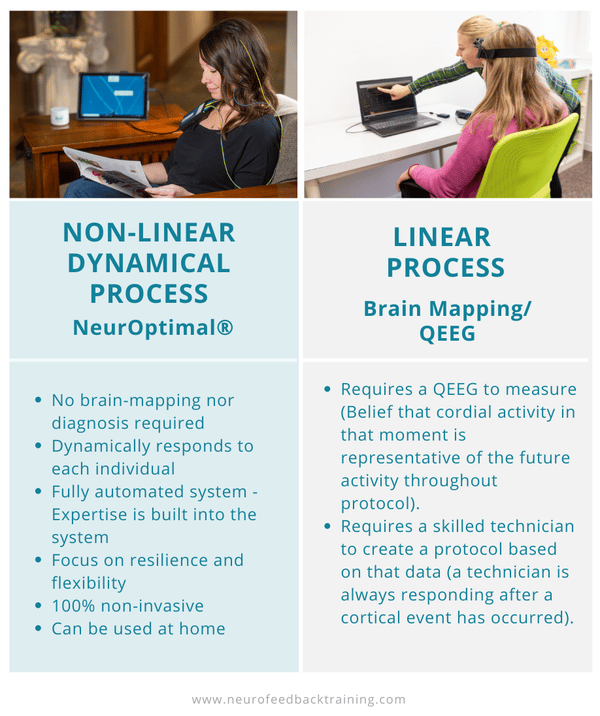
• A neurofeedback trainer first takes a brain map (QEEG) of the brain's electrical patterns
• That map is used as a reference point to set training protocols
• Protocols target specific frequency patterns to migrate the brain toward more typical, healthier patterns (for example, increasing beta and decreasing theta in certain regions)
• Trained practitioners adjust protocols manually as training progresses, typically with updated brain maps every few months
Linear / protocol-based neurofeedback is well-established and remains the foundation of much of clinical practice. Its trade-offs are that the protocol must be set ahead of time by a clinician, must be adjusted manually as goals shift, and is targeted at specific frequencies rather than the brain's overall pattern of self-regulation.
Second generation: Dynamical / non-linear neurofeedback
The second generation of neurofeedback emerged as computing power approached the speed of the brain's own processing. Dynamical neurofeedback is based on non-linear mathematics and was originally conceived by Dr. Valdeane Brown in the early 1970s; the technology only reached its fully intended form around 2005, when laptop-class computing was finally fast enough to monitor brainwave activity at micro-second resolution in real time.
Rather than targeting specific frequencies set by a protocol, a Dynamical system monitors the brain's full EEG activity in real time and provides feedback whenever it detects an inefficient shift. Instead of training a target frequency, it trains flexibility - the brain's capacity to notice and self-correct.
Key features of Dynamical / non-linear systems:
- No pre-session brain map or QEEG required; mapping information in gathered in real-time
- No frequency target - feedback is informational, not directive
- The brain decides how to respond to the feedback
- NeurOptimal, the most widely-used Dynamical system, performs over 200,000 calculations per minute, factoring in changes in voltage, duration, amplitude, and frequency over time
- Most often delivered through brief auditory interruptions in music or sound, which reduces the need to focus on a screen (often a meaningful benefit for children)
- No protocols to adjust between sessions, which makes consistent home use practical
- Designed for safe home use - no risk of over-training a specific frequency
For ADHD-focused brain training, the Dynamical approach has some practical advantages: no repeated brain maps required, no risk of over-training a specific frequency, and the auditory feedback format works well for kids who already spend a lot of time looking at screens.
Our at-home rental program uses second-generation Dynamical neurofeedback - specifically NeurOptimal. It is the same system used in professional clinical settings, configured for home use and supported by weekly 1:1 coaching from a board-certified trainer.
A separate category: consumer EEG headsets
Consumer EEG headsets are a separate category from professional neurofeedback. Often marketed as focus or meditation devices, they typically:
- Use simplified metrics (often only one or two channels)
- Offer limited training flexibility
- Are not full professional-grade systems
- Generally do not include 1:1 coaching from a board-certified trainer
Consumer headsets can be useful for general awareness or meditation support, but for structured ADHD-focused brain training they are not in the same category as either first-generation protocol-based systems or second-generation Dynamical systems.
How a Dynamical neurofeedback session works
A Dynamical neurofeedback session looks like this:
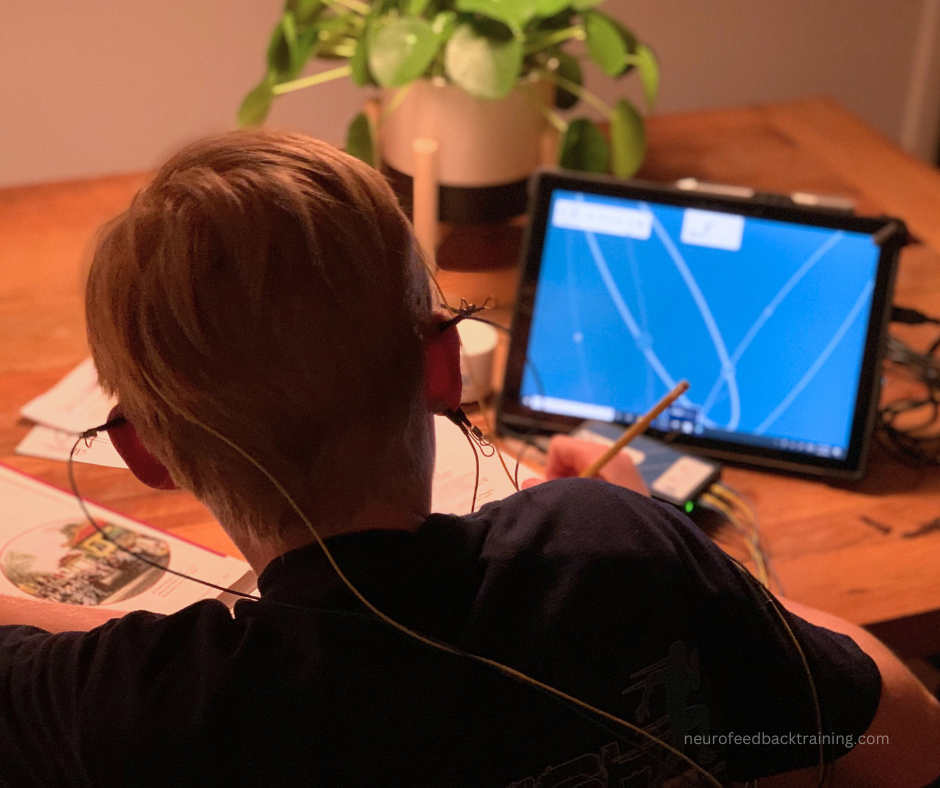
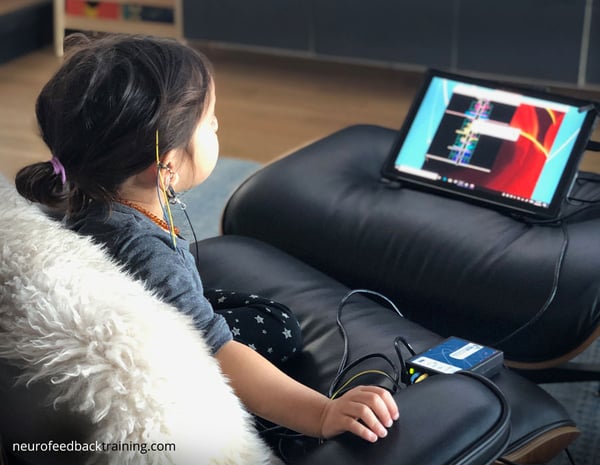
A few EEG sensors are placed on the scalp - usually two on the head and a few small clips on the ears. The session software plays music or a video. As the brain's activity is monitored, the system listens for moments of inefficiency - abrupt shifts, instability, patterns associated with distraction or stress. Whenever it detects one, it briefly interrupts the audio. The interruption is the information. The brain notices it, takes that information in, and gradually reorganizes.
The person doesn't have to actively "do" anything. They don't try to focus harder. They don't try to slow their thoughts. They simply receive the information and let the brain process it.
Most ADHD-focused neurofeedback programs:
- Use 30 to 60 sessions total
- Run sessions about 30 minutes long
- Are completed 3 to 5 times per week
- Take 8 to 16 weeks total to complete
Training frequency matters more than total session count. Three sessions per week typically produces faster shifts than once-weekly sessions. Consistency is the strongest predictor of progress.
What does the research say?
The research on neurofeedback for ADHD is large but mixed. Several meta-analyses and controlled studies have reported measurable improvements in attention regulation, impulse control, hyperactivity symptoms, working memory, and emotional regulation compared to non-treatment controls. Other studies - particularly large randomized trials with sham controls - have shown smaller effects than expected, or effects that may be partly explained by non-specific factors such as consistent practice, structured routine, and time spent in focused tasks.
A summary as of 2026:
- Multiple meta-analyses have found that neurofeedback training is associated with improvements in some ADHD-related symptoms, particularly when delivered with proper protocols and consistent attendance.
/neurofeedback-training-for-kids-teens-at-home-session-neuroptimal-system.png?width=500&height=281&name=neurofeedback-training-for-kids-teens-at-home-session-neuroptimal-system.png "neurofeedback-training-for-kids-teens-at-home-session-neuroptimal-system")
- Effect sizes vary substantially by study, by system type, and by population.
- Different professional bodies have different views on the strength of the evidence. Some pediatric guidelines have classified it favorably; others remain more cautious.
- Neurofeedback is not FDA-approved as a treatment for ADHD. It is regulated as a wellness practice for general brain training, not as a medical device for ADHD.
The strongest predictor of benefit appears to be consistent participation in a properly-supervised program - regardless of which type of system is used.
What results can you realistically expect?
Results from neurofeedback brain training are rarely linear. Progress tends to come in shifts, not a steady curve.
Early shifts (typically 10-20 sessions in) often include:
- Improved sleep
- Reduced irritability
- Slightly better focus
- Faster recovery from emotional moments
Over a longer arc (40+ sessions), people commonly notice:
- Increased independence (for kids: less reliance on parental scaffolding)
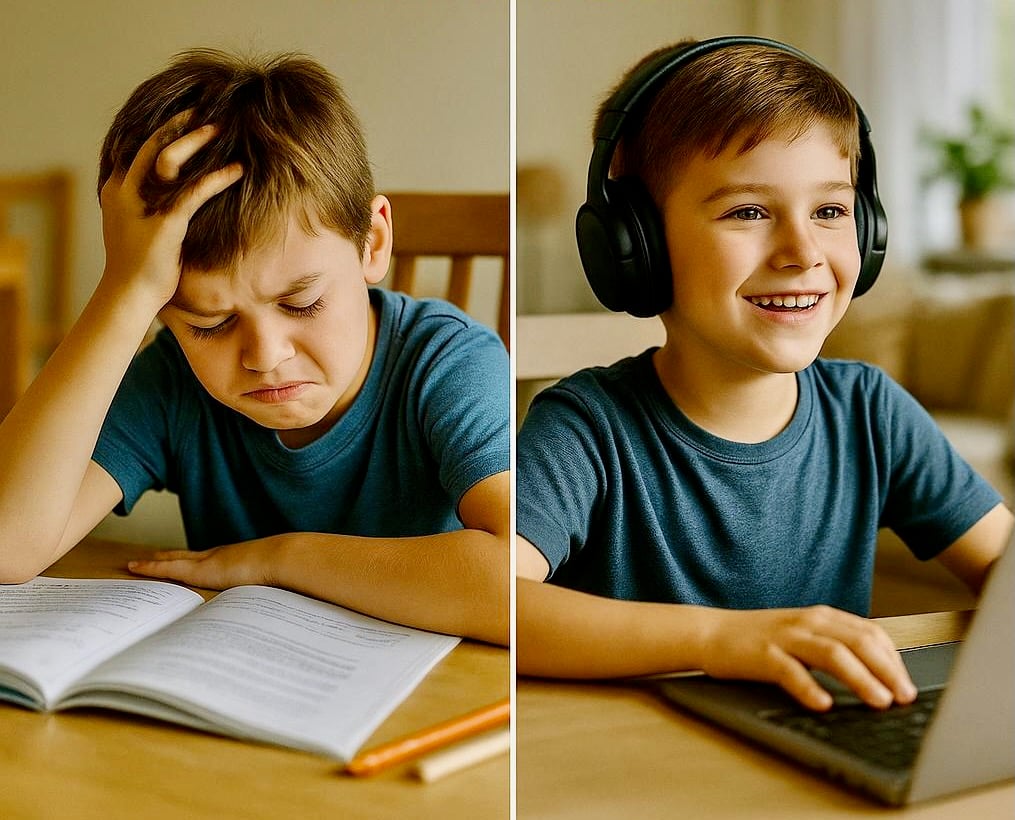
- Fewer emotional outbursts and homework battles
- Improved frustration tolerance
- Better classroom or workplace engagement
Brain training supports regulation capacity. It does not eliminate personality traits, creativity, or the underlying neurodevelopmental wiring of ADHD. The goal is more flexibility and better self-regulation, not a different brain.
If you complete 20 sessions and notice nothing - no awareness shift, no subjective change - raise it with your trainer. Sometimes it means the approach needs adjusting. Sometimes it means brain training isn't the right fit, and that's also useful information.
Who might brain training be a fit for?
- Are already working with a healthcare provider on ADHD support and want to add a complementary skill-building practice
- Want non-medication support, or to complement existing care
- Notice emotional reactivity alongside attention challenges
- See stress worsening ADHD-related symptoms
- Prefer home-based flexibility over clinic visits
- Have time to commit to 8-16 weeks of regular practice
- Are looking for a fast or single-intervention solution
- Cannot reliably commit to 3-5 sessions per week
- Want to replace existing ADHD care without consulting their healthcare provider
We always recommend discussing any new practice - including brain training - with the healthcare provider managing your ADHD support, especially if medication or active behavioral therapy is involved.

At-home Dynamical neurofeedback for ADHD
Three factors matter most for results in home neurofeedback:
1. Frequency of sessions
2. Consistency over weeks
3. Appropriate system quality (professional-grade, not consumer)
Dynamical neurofeedback is particularly well-suited for home use because:
- There are no protocol adjustments required between sessions, so a board-certified trainer can support the program effectively from a distance.
- The system is designed for safety and flexibility, with no risk of over-training a specific frequency.
- The auditory feedback format works well for kids who already spend a lot of time looking at screens.
- Equipment is professional-grade and configured for at-home setup
Historically, neurofeedback was only available in clinics, at typical costs of $100 to $200 per session - meaning $3,000 to $12,000 for a full program. For ADHD-focused training in particular, where consistency over 8-16 weeks is the strongest predictor of benefit, clinic-only access has been a major barrier. At-home Dynamical neurofeedback solves this with the same clinical-grade system, configured for home use and supported with weekly 1:1 coaching.
ADHD neurofeedback sessions in New York City
If you're in the New York City area and would rather train in person than at home, we offer NeurOptimal® neurofeedback sessions at our clinic in Union Square. In-office sessions are a good fit for families who want hands-on guidance to start, kids and teens who benefit from a dedicated space away from home distractions, and adults who prefer a structured weekly appointment.
Our NYC in-office ADHD sessions include:
- 45-minute NeurOptimal® sessions at 32 Union Square East, Monday–Saturday
- Certified trainers who walk you through the science and set a realistic training cadence
- Transparent pricing: $150 per session, with 5-session ($599) and 10-session ($1,150) packages
- The option to transfer any unused package sessions toward an at-home rental if you'd like to increase frequency — consistency (3–5 sessions per week) is the strongest predictor of progress with ADHD
Because ADHD-focused training benefits from frequency, many NYC families start in-office to learn the process, then continue at home with our rental program to keep sessions consistent over the recommended 8–16 weeks.
Cost and time commitment
|
Option |
Typical cost |
Time commitment |
|
In-clinic neurofeedback |
$3,000 - $12,000 for full program |
Travel + 30-min session, 3-5x/week |
|
At-home Dynamical rental (with coaching) |
Starting at $650/month, all-inclusive |
30-min session at home, 3-5x/week |
|
Consumer-tier headsets |
$300 - $1,500 device + apps |
Self-directed, varies |
Neurofeedback is generally not covered by insurance for ADHD because it is not FDA-approved as a treatment. Some clinics offer HSA/FSA eligibility under certain conditions; check with your specific plan provider.
How brain training fits alongside other ADHD support
Most people managing ADHD use more than one support strategy. Neurofeedback brain training is one option that can fit alongside others:
- Medication. Medication chemically alters neurotransmitter levels to improve focus and impulse control. Neurofeedback trains the brain to regulate itself more effectively, gradually, through repeated practice. Some families choose neurofeedback before exploring medication; some alongside; some after experiencing medication side effects. This is a personal decision that should be discussed with a medical provider. Neurofeedback is not a medical treatment replacement.
- Behavioral therapy and ADHD coaching. These approaches build practical skills (planning, prioritization, follow-through) that complement the focus and self-regulation training that neurofeedback supports.
- Exercise. Regular aerobic exercise has well-documented benefits for ADHD-related symptoms.
- Sleep optimization. Sleep deprivation worsens ADHD-related challenges. Addressing sleep is one of the highest-leverage non-medical supports.
- Mindfulness practice. Like neurofeedback, mindfulness practice builds self-awareness of attentional state. Many people find the two practices reinforce each other.
We do not position neurofeedback as a substitute for any of these. Brain training is one tool. The decision about which tools to use, in which combination, is best made in conversation with a healthcare provider.
Frequently asked questions about neurofeedback for ADHD
Does neurofeedback cure ADHD?
No. Neurofeedback does not cure ADHD. It is a brain-training process that aims to support the brain's regulation capacity, which may help with focus, emotional regulation, and self-correction skills for people living with ADHD. It is not a substitute for medical or psychological care.
What is the difference between protocol-based and Dynamical neurofeedback?
They are two generations of professional neurofeedback technology. First-generation protocol-based (linear) neurofeedback uses a pre-set protocol, typically based on a QEEG/brain map, to target specific frequency patterns (for example, increasing beta and decreasing theta). Protocols must be adjusted by a clinician as training progresses. Second-generation Dynamical (non-linear) neurofeedback, such as NeurOptimal, does not target specific frequencies. It monitors the brain's full EEG activity in real time and provides feedback whenever it detects inefficient shifts, allowing the brain to self-correct. No brain map is required, and no protocol adjustments are needed between sessions, which makes Dynamical systems particularly well-suited for safe home use.
Does neurofeedback work for ADHD?
Research on neurofeedback for ADHD is mixed but generally encouraging. Multiple meta-analyses have found that neurofeedback training is associated with improvements in some ADHD-related symptoms, particularly attention and self-regulation. Effect sizes vary, and not everyone responds. The strongest predictor of benefit appears to be consistent participation in a properly-supervised program.
Is neurofeedback a treatment for ADHD?
No. Neurofeedback is a brain-training method, not a medical treatment. It is not FDA-approved as a treatment for ADHD and should not be used as a substitute for diagnosis or care from a qualified healthcare provider. Many people use it as a complementary practice alongside their existing ADHD support.
How long does a neurofeedback program for ADHD take?
Most ADHD-focused neurofeedback programs use 30 to 60 sessions over 8 to 16 weeks. Sessions are typically 30 minutes long, completed 3 to 5 times per week. Many people begin to notice early shifts within 10 to 20 sessions, and more consolidated changes typically emerge after 40 sessions.
How much does neurofeedback for ADHD cost?
A full course of in-clinic neurofeedback — typically 30 to 60 sessions — runs about $3,000 to $12,000 at most clinics. At our own NYC office in Union Square, we price transparently: $150 per session, with 5-session ($599) and 10-session ($1,150) packages. If you'd rather train at home, our at-home Dynamical rental program with weekly 1:1 coaching starts at $650 per month, all-inclusive — usually less than half the cost of a full in-clinic program. Consumer-tier headsets are cheaper but generally don't include professional protocols or coaching.
Can I do neurofeedback for ADHD at home?
Yes. Professional-grade Dynamical neurofeedback systems are well-suited for home use because they don't require protocol adjustments between sessions and have no risk of over-training a specific frequency. Home programs work best when paired with weekly 1:1 video coaching from a board-certified trainer.
Can neurofeedback make ADHD worse?
Temporary fluctuations can occur as the brain adjusts during training — for example, mild fatigue or short-lived emotional variability. Systems designed for flexibility (such as Dynamical neurofeedback) are intended to support the brain's resourcing capacity rather than push it into a specific state, which is one reason they are considered safe for home use.
Is neurofeedback for ADHD covered by insurance?
Neurofeedback is generally not covered by insurance for ADHD because it is not FDA-approved as a treatment. Some clinics offer HSA/FSA eligibility under certain conditions, so check with your specific plan. Because it's typically self-pay, we keep our pricing transparent: at our NYC office in Union Square, in-office sessions are $150 each, with 5-session ($599) and 10-session ($1,150) packages. Many families use HSA/FSA funds where eligible.
Can children do neurofeedback for ADHD?
Children can participate in neurofeedback brain training programs, and there is research on pediatric populations. Dynamical systems with auditory feedback are often a good fit for children because they don't require sustained focus on a screen. As with any practice involving a child with ADHD, it should be coordinated with the child's healthcare provider.
How is neurofeedback different from ADHD medication?
They are different categories of support. Medication chemically alters neurotransmitter levels to improve focus and impulse control. Neurofeedback is a brain-training practice that supports the brain's ability to self-regulate over time. They are not substitutes for each other, and many people use both as part of a broader plan, in coordination with a medical provider.
Is neurofeedback safe?
Neurofeedback is non-invasive. The equipment only reads brainwaves; it does not send any electrical signal, magnetic pulse, or stimulation into the brain. Side effects, when reported, are mild (such as temporary tiredness after a session) and resolve quickly.
Get started with at-home Dynamical brain training for ADHD
If you've decided that brain training might fit your ADHD support plan and you've discussed it with your healthcare provider, our at-home rental program gives you professional-grade Dynamical equipment (NeurOptimal), weekly 1:1 coaching from a board-certified trainer, and a personalized program built around your goals.
