Consumer Wearables vs. Clinical Neurofeedback: What $300 Buys and Where It
Stops
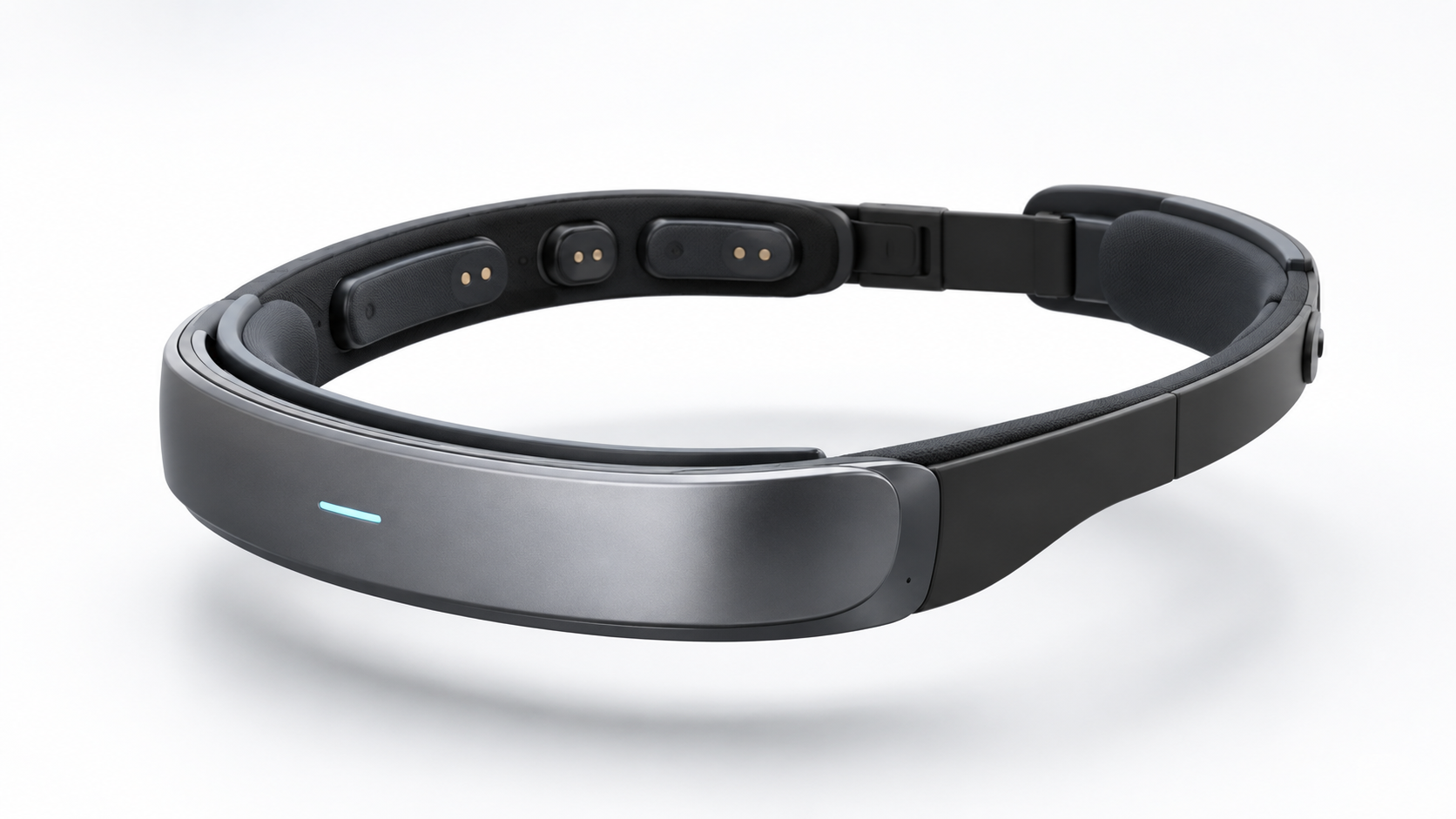
Consumer headbands like Muse ($250–$500) and Mendi ($349 ) are real brain-training tools that reward calm or focused states but they are not clinical-grade neurofeedback systems, which process the raw EEG signal across the full spectrum of brain activity and cost $650–$950/month to rent or $6,500–$9,995 to own. Both tiers have a legitimate place. This guide explains exactly what each one does, where the inexpensive tier stops, and how to decide which you actually need - based on 15 years of training clients who have used both.
Licensed Psychotherapist · Advanced NeurOptimal® Trainer · Amen Clinic Brain Health Coach
Natalie has over 25 years of experience as a licensed psychotherapist and has been a NeurOptimal® neurofeedback trainer since 2011. She is the founder of Neurofeedback Training Co. and specializes in anxiety, trauma, ADHD, and stress-related nervous system dysregulation.
.png)
The three tiers of home brain training
Everything sold as "home neurofeedback" falls into one of three tiers, and the differences are larger than the marketing suggests.
| Tier 1: Consumer wearables | Tier 2: App + clinician subscriptions |
Tier 3: Clinical-grade systems | |
| Examples | Muse, Mendi, FocusCalm | Myndlift (Muse hardware + remote clinician) | NeurOptimal® (the system we rent and sell) |
| Cost | $250–$500 one-time ( verify✓ current prices) | $75–$200/month, ongoing ( )✓ | Rent $650–$950/mo · own $6,500 used to $9,995 new |
| What it reads | Dry-sensor EEG (Muse) or forehead blood-flow/fNIRS (Mendi) | Dry-sensor EEG via consumer headband | Raw EEG via paste-applied clinical sensors + medical-grade amplifier, sampled 256×/second |
| What it trains | One target: a calm or focus score | Clinician-chosen protocol targets | The full spectrum of brain activity — the system responds to shifts as they happen |
| Training method | Gamified reward (birds chirp, ball rises) when you hold one state | App games/videos tied to protocol | Automatic feedback; nothing to "get right" during a session |
| Human support | None | Remote clinician check-ins | Trainer onboarding + ongoing support included |
| Who sessions cover | One user profile | Per-user subscription | Unlimited sessions, whole household |
One important clarification, because buyers ask us often: this is not "cheap fake vs. expensive real." Each tier does what it is built to do. The question is whether what it is built to do matches what you need.
What wearables do well
As an authorized NeurOptimal® representative, you might expect us to dismiss consumer neurofeedback headbands that cost around $300. We do not. Wearable neurofeedback devices can be useful when they are matched to the right goal.
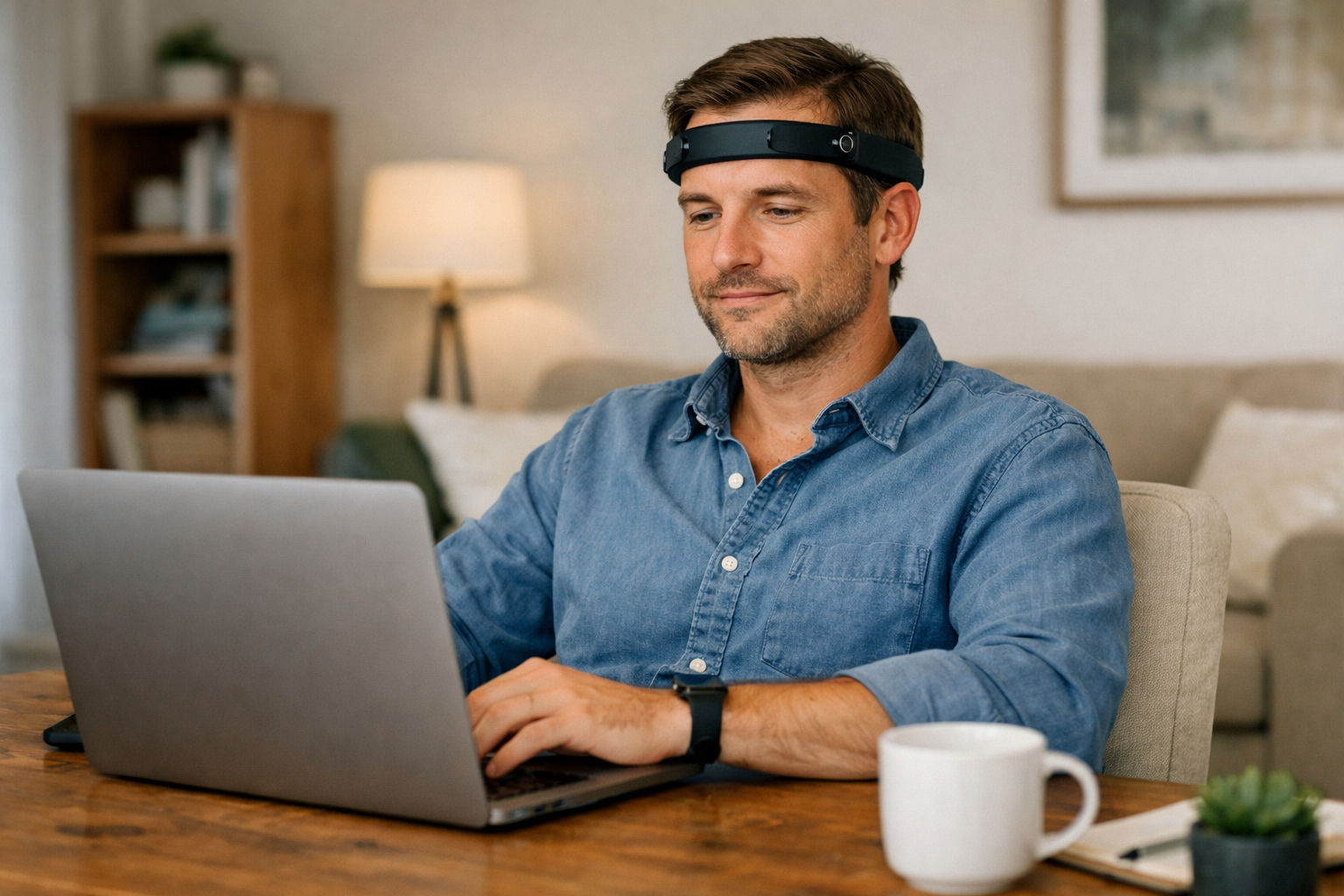
For example, devices such as Muse, can make meditation more concrete by translating shifts in attention into real-time audio feedback. For people who struggle to meditate or are unsure whether they are “doing it right,” that immediate feedback can make the practice easier to understand and maintain.
Wearable devices can also support consistency. A short, gamified 10-minute session, progress tracking, and streak reminders may help people build a daily meditation or self-awareness habit. In practice, the best device is often the one a person will use regularly.
The price can also be appropriate for the purpose. For roughly $250 to $400, a consumer neurofeedback headband may provide good value as a meditation aid, attention-awareness tool, or entry point into brain training.
If your main goal is to develop a steadier meditation practice and become more aware of your mental state, a wearable neurofeedback device may be all you need.
Where wearables stop
The limits are structural — built into the hardware and the training model — not a matter of effort or app updates.
- Signal quality. Dry sensors pressed against skin lose contact with movement, hair, and dryness; user reviews consistently cite connection dropouts. Clinical systems use conductive paste and a medical-grade amplifier precisely because the raw signal is the product.
- One metric vs. the whole picture. A wearable distills brain activity into a single score and rewards you for pushing it one direction. Clinical-grade systems monitor activity across the full spectrum and respond to how your brain shifts moment to moment — a categorically different training model, not a stronger dose of the same one.
- Effortful vs. effortless training. With a wearable you are actively trying to hold a state, which is why results often fade when the game stops. NeurOptimal sessions require nothing from you — the feedback works whether you are reading or resting — so the training doesn’t depend on performing.
- No one is watching. When progress stalls at week six, a wearable has no answer for you. There is no trainer to adjust anything or interpret what you’re noticing.
- The plateau pattern. The arc we hear most from clients who arrive with a wearable in a drawer: two engaged months, a real bump in calm, then diminishing returns and boredom. That is not a defective product — it is a single-metric tool completing its job.
“Is Muse real neurofeedback?”
Partly. Muse reads real EEG and feeds it back to you, which meets the technical definition of biofeedback for brain activity. What it is not is clinical-grade neurofeedback: the sensor quality, the single trained metric, and the consciously-effortful training model are all different from the systems used in professional practice. Mendi is not EEG at all — it reads forehead blood flow (fNIRS), a related but different signal. Neither fact makes these devices useless; both facts matter if what you want is what a professional system does.
Who should upgrade — and who should not
Stay with a wearable (or buy one) if: you want a meditation aid, you enjoy the gamified format, your goals are modest, or $300 is the budget. It is honest value at that price.
Consider clinical-grade if any of these fit: you used a wearable consistently and hit the plateau; you’re supporting a child or several family members (one NeurOptimal system covers the whole household with unlimited sessions); you’re working on deeper, long-standing patterns — sleep, reactivity, stress load — where a single calm-score doesn’t reach; or you want trainer support rather than an app’s FAQ page.
Skip both tiers if you’re in acute crisis — brain training is wellness support, not a substitute for professional mental-health care. Talk to a clinician first.
/neurofeedback-training-for-kids-teens-at-home-session-neuroptimal-system.png?width=500&height=281&name=neurofeedback-training-for-kids-teens-at-home-session-neuroptimal-system.png "neurofeedback-training-for-kids-teens-at-home-session-neuroptimal-system")
The proportionate next step: rent before you decide anything
The honest problem with this comparison is that one tier costs $300 and the other costs thousands. You should not leap that gap on an article’s say-so — including ours. That is exactly why we rent: $650–$799/month, unlimited sessions for the whole household, trainer support included, no commitment. Clients who come from a Muse or Mendi typically know within 4–6 weeks whether the difference is worth it for them.
Trained with a headband and want to feel the difference? Rent the clinical-grade NeurOptimal® system — the same equipment professionals use — from $650/month.
Full pricing picture
| Option | Upfront | Ongoing | Total, 1 year of training |
| Muse 2 / Muse S | $250–$475 (✓) | Optional app ~$95/yr (✓) | ~$250–$570 |
| Mendi | ~$300 (✓) | None | ~$300 |
| Myndlift | Headband ~$250 (✓) | ~$75–$200/mo (✓) | ~$1,150–$2,650 |
| NeurOptimal rental | None | $650–$950/mo | $650–$950/mo only while you need it; most rent 1–3 months |
| NeurOptimal used (from us) | $6,500–$8,350 + $495 license transfer | Optional support/PASS | $7,000–$8,850 — then $0, unlimited, whole household |
| NeurOptimal new | $9,995 (financing available) | Optional support/PASS | $9,995 — then $0, unlimited, whole household |
Note the crossover: a year of Myndlift can approach the cost of several months of clinical-grade rental — and a family that trains long-term crosses the buy-vs-subscribe line quickly. That math, not marketing, is why committed households end up owning.
Frequently asked questions.
Is a $300 headband a waste of money?
No. As a meditation aid and habit-builder it is fair value. It becomes the wrong purchase only when you expect clinical-grade training from it.
What is the difference between Muse and NeurOptimal?
Muse uses dry sensors to track a calm/focus score you consciously try to improve. NeurOptimal uses paste-applied clinical sensors and a medical-grade amplifier to monitor the full spectrum of brain activity, providing automatic feedback with no conscious effort required — and includes trainer support.
Is Mendi the same as EEG neurofeedback?
No. Mendi measures forehead blood flow (fNIRS), not the brain’s electrical activity. It is a legitimate attention-training tool, but a different technology from EEG neurofeedback.
I used a Muse for months and stopped seeing changes. Is that normal?
It is the most common story we hear. Single-metric training tends to deliver early gains that level off. It usually means you got what the device offers, not that brain training "doesn’t work for you."
Do I need a clinician to use NeurOptimal at home?
No. The system is fully automated and is designed for home use with no protocol to set. We include onboarding and trainer support with every rental and purchase.
How much does clinical-grade neurofeedback cost at home?
$650–$950/month to rent (unlimited household sessions), $6,500–$8,350 for a verified used system, or $9,995 new with financing available.
Can the whole family use one system?
Yes — unlimited sessions for the household on one system. This is where clinical-grade becomes cheaper per person than wearables with per-user subscriptions.
What results can I expect?
Individual experiences vary. Clients most often report steadier sleep, less reactivity under stress, and more mental bandwidth over the first weeks of regular training. Neurofeedback is wellness training, not a medical treatment.
What is the best home neurofeedback device?
The answer depends entirely on what you need it to do. Consumer wearables like Muse ($250–$400) and Mendi ($300) are well-built for relaxation and focus games, but they train a single target score rather than responding to your full brain activity. If you want clinical-grade training — the same system used by practitioners — NeurOptimal® is available to rent from $650–$950/month with trainer support included, which lets you experience the difference before deciding whether to purchase.
Ready to feel the difference? Rent NeurOptimal from $650/month — trainer support included.
